

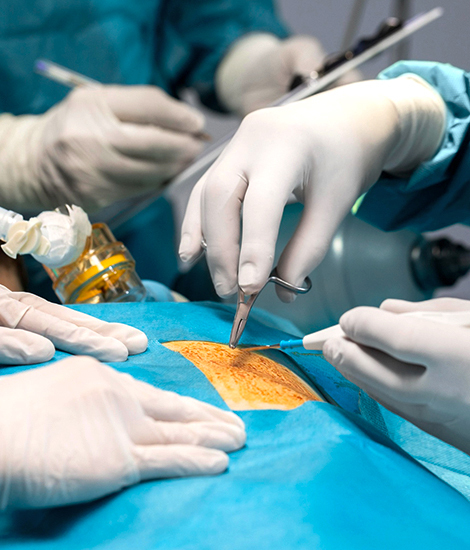
General Surgery
Treatments and procedures performed in the Institute of General & Laparoscopic Surgery includes the following:
Thyroid
Hemithyroidectomy, Total thyroidectomy, Completion thyroidectomy, Parathyroidectomy for single/multiple parathyroid adenoma, Total parathyroidectomy, Submandibular gland excision, Superficial parotidectomy, Total parotidectomy.
Breast
Excision biopsy of breast lump, Wide local excision of breast lump, Modified Radical mastectomy for cancer of breast, Simple mastectomy, Microdocectomy, Drainage of breast abscess
Abdomen
Open Cholecystectomy, Roux-en-y hepaticojejunostomy, CBD Exploration, Distal pancreatectomy, Cyst-jejunostomy, Cyst-gastrostomy, Whipple’s operation, Transhiatal esophagectomy, Radical gastrectomy, Laparotomy and repair of duodenal ulcer, bowel resection and anastomosis, Splenectomy, Ileostomy, Closure of ileostomy, Repair of small bowel perforation, Splenectomy, Feeding jejunostomy, Appendicectomy, Drainage of appendicular abscess
Colon and Rectum
Right hemicolectomy, Subtotal colectomy, Hartman’s procedure, fistula in ano, Lateral sphincterotomy for fissure-in-ano, Abdominoperineal resection, Colostomy closure, Ischiorectal/perianal abscess, APR, Stapled Haemorrhoidectomy, Left colectomy, Abdominal rectopexy, Laparoscopic anterior resection, Retroperitoneal tumour, Hydatid cyst, Retroperitoneal mass.
Hernia
Litchenstein mesh repair of inguinal hernia, Shouldice repair of inguinal hernia, Bassini repair of inguinal hernia, Abdominoplasty, Parastomal hernia, Spigelian hernia, Mesh repair of incisional hernia, mesh repair of ventral/epigastric/umbilical hernia
Urology
Nephrectomy, Pyelolithotomy, Retroperitoneoscopic nephrectomy, Ureterolithotomy, Orchidectomy, Orchidopexy for undescended testis, Circumcision, Pyeloplasty, Palomo’s operation, Testicular biopsy, Vasectomy, Eversion of hydrocele sac, Adrenalectomy.
Vascular and Lymphatics
Trendelenburg’s procedure with stripping of LSV for Varicose veins, Endoscopic sub-fascial ligation of varicose veins
Skin And Soft Tissue
Excision of superficial sin//soft tissue swellings, lipoma, sebaceous cyst, ganglion, Excision biopsy, Incision & Drainage, Excision of carbuncle, Lymph node biopsy, Wedge excision of ingrowing toe nail, Removal of foreign body, Exploration of sinus, Excision/ flap repair of pilonidal sinus, Secondary suturing of wound, Debridement, Split skin grafting,
Laparoscopic Surgery
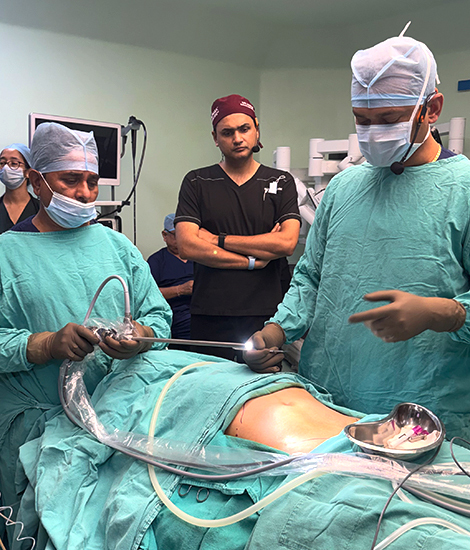
Laparoscopy is a surgical procedure which uses a special surgical instrument called a laparoscope to look inside the body, or to perform certain operations.
What is a laparoscopy?
Laparoscopy is a procedure to look inside your abdomen by using a laparoscope. A laparoscope is like a thin telescope with a light source. It is used to light up and magnify the structures inside the abdomen. A laparoscope is passed into the abdomen through a small incision (cut) in the skin.
A laparoscopy may be done to find the cause of symptoms such as abdominal pain, pelvic pain, or swelling of the abdomen or pelvic region. Or, it may be done if a previous test such as an X-ray or ultrasound scan has identified a problem within the abdomen or pelvis. A laparoscopy enables a doctor to see clearly inside your abdomen. Some common conditions which can be seen by laparoscopy include:
- Endometriosis
- Pelvic inflammatory disease
- Ovarian cyst
- Appendicitis
- Small intestine stricture
- Peritoneal, hepatic, omental lesions such as metastasis and tuberculosis
What is laparoscopic surgery?
Laparoscopic surgery also referred to as minimally invasive surgery describes the performance of surgical procedures with the assistance of a video camera and several thin instruments. During the surgical procedure, small incisions of up to half an inch are made and plastic tubes called ports are placed through these incisions. The camera and the instruments are then introduced through the ports which allow access to the inside of the patient.
The camera transmits an image of the organs inside the abdomen onto a television monitor. The surgeon is not able to see directly into the patient without the traditional large incision. The video camera becomes a surgeon’s eyes in laparoscopy surgery, since the surgeon uses the image from the video camera positioned inside the patient’s body to perform the procedure.
Benefits of minimally invasive or laparoscopic procedures are :
- less post operative discomfort since the incisions are much smaller
- quicker recovery times
- shorter hospital stays
- earlier return to full activities
- much smaller scars
- there may be less internal scarring when the procedures are performed in a minimally invasive fashion compared to standard open surgery.
PROCEDURES WHICH CAN BE PERFORMED BY LAPAROSCOPY –
Abdominal Surgery
Gall Bladder Surgery
Advanced biliary surgery
- Choledochal cyst excision with hepaticojejnostomy
- CBD exploration for CBD stones
Hernia Surgery
- Inguinal-Total Extraperitoneal (TEP) Repair
- Incisional- Laparoscopic Intraperitoneal Onlay Mesh (IPOM)
- Umbilical-Laparoscopic Intraperitoneal Onlay Mesh (IPOM)
- Congenital Inguinal Hernia- Herniotomy
Appendicectomy
Lower end oesophagus
- Fundoplication (for gastroesophageal reflux disease-GERD)
- Mesh cruroplasty (for hiatus hernia)
- Cardiomyotomy (for Achalasia Cardia)
Vagotomy & Gastrojejunostomy(for gastric outlet obstruction)
Solid Organ Surgery
- Liver (Cysts, Abcesses)
- Spleen
- Kidney
- Pancreas
- Adrenals
Anorectal Surgery
- Mesh Rectopexy (for rectal prolapsed)
Colorectal cancer surgery
- Laparoscopic Abdominoperineal Resection
- Laparoscopic Anterior Resection
Diagnostic Laparoscopy
- For undiagnosed abdominal pain, fever, swelling
- Intrabdominal lymph node biopsy
- Small bowel resection and anastomosis
Gynaecological Surgeries
- Total laparoscopic hysterectomy
- Myomectomy
- Salpingectomy
- Oophorectomy
- Ovarian cystectomy
- Endometrioma excision
Urology
- Nephrectomy
- Pyeloplasty
- Large kidney or uretric stone
Endoscopic Neck Surgery
- Parathyroid and thyroid surgery
Thoracoscopy
- Undiagnosed Pleural effusion
- Lymph Node and lung biopsy
- Pleural drainage for early empyema
- Decortication for late empyema
- Thymectomy
All types of Bariatric (OBESITY) Surgery for morbid obesity
- Laparoscopic Gastric banding
- Laparoscopic Roux- en-Y Gastric Bypass
- Laparoscopic Sleeve Gastrectomy
- Laparoscopic Mini Gastric Bypass (MGB)
Obesity Or Bariatric (Weight Loss) Surgery
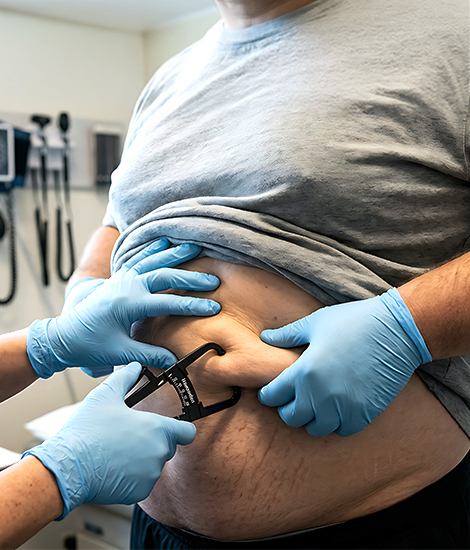
Obesity is a multifactorial disease due to accumulation of excess fat in the body. It refers to a spectrum of problems of excess weight, ranging from mild overweight to severe obesity. Obese people are more likely to develop reflux disorders and heartburn, high blood pressure, diabetes, arthritis, some cancers including prostate, breast, cervix and ovarian cancer, snoring and sleep disorders, fatty liver disease , menstrual irregularities and infertility, depression and adjustment problems in society. With the epidemic of obesity no longer confined to the west, the demand for bariatric surgery has been on the increase. The focus is on Laparoscopic Roux-en-Y Gastric Bypass and Sleeve Gastrectomy. The benefits of laparoscopic surgery become particularly important as far as bariatric surgery is concerned. Weight loss surgery is almost guaranteed to help you lose weight, but like all good tools, it works best in the hands of a worker who is well trained and Dr. Ashish Dey is one of them..
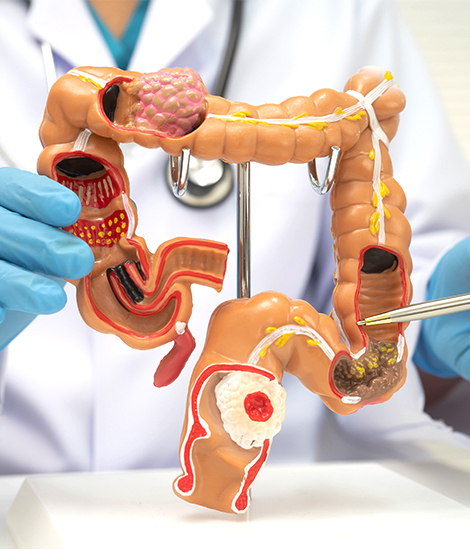
Colorectal Surgery
Dr. Ashish Dey has special interest in Colorectal Surgery, Colorectal Surgery has 3 different types.
Colorectal Cancer
- Hemorrhoids
- Rectal Prolapse
- Colorectal Cancer
Colorectal cancer is the second most common preventable cancer after lung cancer. That’s a staggering figure when you consider the disease is potentially curable if diagnosed in the early stages.
It is generally agreed that nearly all colon and rectal cancer begins in benign polyps. These pre-malignant growths occur on the bowel wall and may eventually increase in size and become cancer. Removal of benign polyps is one aspect of preventive medicine that really works!
Hemorrhoids
Often described as “varicose veins of the anus and rectum”, hemorrhoids are enlarged, bulging blood vessels in and about the anus and lower rectum. There are two types of hemorrhoids: external and internal, which refer to their location.External (outside) hemorrhoids develop near the anus and are covered by very sensitive skin. These are usually painless. However, if a blood clot (thrombosis) develops in an external hemorrhoid, it becomes a painful, hard lump. The external hemorrhoid may bleed if it ruptures.
Rectal Prolapse
Rectal prolapse is a condition in which the rectum (the lower end of the colon, located just above the anus) becomes stretched out and protrudes out of the anus. Weakness of the anal sphincter muscle is often associated with rectal prolapse at this stage, resulting in leakage of stool or mucus. While the condition occurs in both sexes, it is much more common in women than men.